








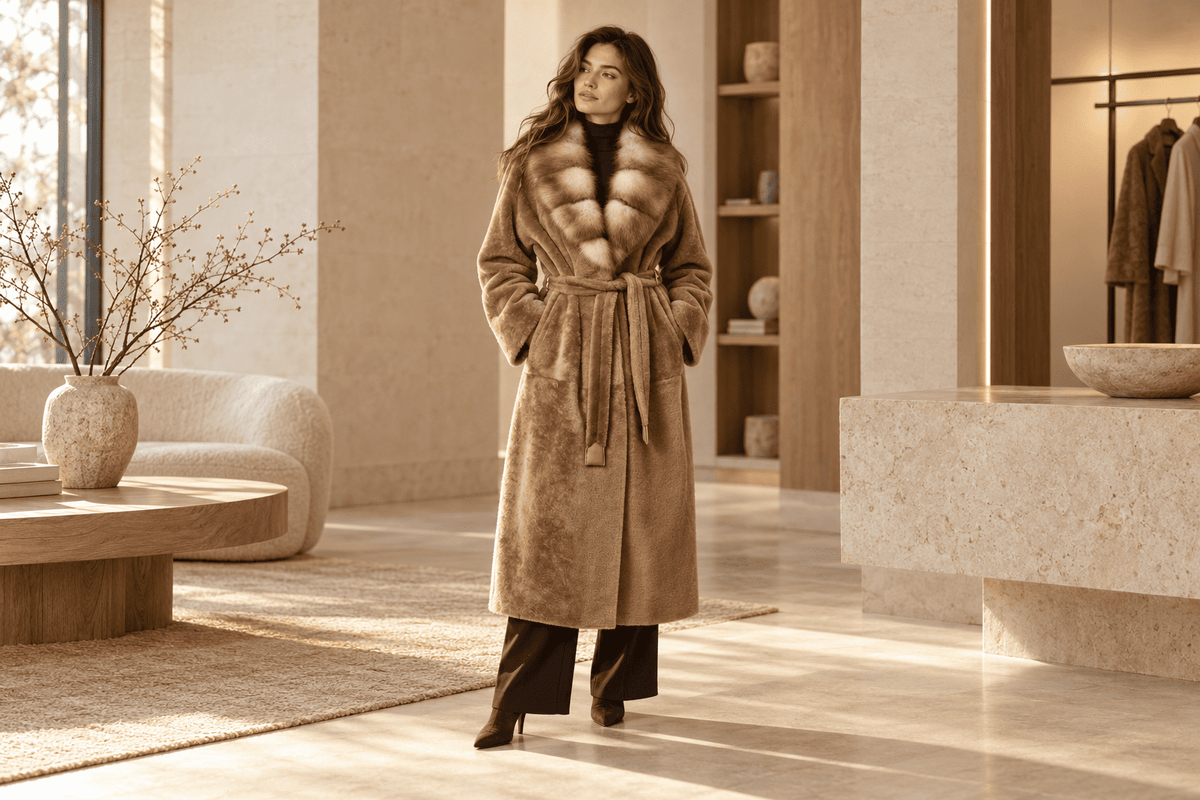
Merino Wool: Properties, benefits, and how to care for it properly
Merino wool is a natural fiber obtained from Merino sheep, prized for its fineness, temperature regulation, moisture management, and elasticity. It is used for both sportswear and sweaters, cardigans, suits, dresses, coats, and other premium pieces.
However, quality is not identical for all products labeled “merino.” The fineness and length of the fibers, the composition, the construction of the material, the cut, and the finishing must be analyzed together. Wool care is equally important, as improper washing or drying can deform even a well-made item.
What merino wool is and where it comes from

Merino wool is a natural fiber obtained from the wool of Merino sheep. It differs from many types of wool due to its finer fibers, which bend more easily when they come into contact with the skin and less frequently produce the characteristic prickly sensation.
The term “merino” refers to the breed of sheep, while “merino wool” describes the fiber obtained from them. After shearing, the wool is sorted, cleaned, and transformed into fibers that can be knitted or woven.
What wool micronage means
Micronage expresses the diameter of the fiber. One micron represents one millionth of a meter. Generally, finer fibers are more flexible and more comfortable against the skin, while thicker fibers can be chosen for structure and strength.
According to Woolmark, fibers under approximately 19.5 microns are frequently used for items worn directly against the skin and fine knits. The range of approximately 19.5–22 microns appears in clothing and knits, while 22–24 micron fibers can be used for outerwear. The actual micronage must be checked in the specifications of each product.
Why merino wool is finer than many types of wool
The difference comes mainly from the diameter and flexibility of the fibers. A fine fiber bends more easily when it touches the skin and produces less pressure on the nerve endings.
Merino remains wool, not a completely different material. Other breeds can produce thicker fibers, suitable for sturdy fabrics, structured coats, rugs, or home textiles.
The properties of merino wool

It provides insulation without excessive bulk
Wool fibers have a natural crimp that helps create small pockets of air in the material. The trapped air helps limit heat loss.
This structure allows for the creation of warm knits and fabrics without the piece necessarily being very heavy. However, real protection depends on density, thickness, cut, and the layers worn.
It helps regulate temperature
Wool does not produce heat, but rather helps maintain a comfortable microclimate next to the body. Therefore, it can be used both in thin layers and in sweaters, dresses, or coats for the cold season.
A fine sweater can work under a jacket or coat, while a dense fabric is suitable for outerwear. Neither option automatically replaces waterproof protection.
It manages moisture and odors
The fiber structure can absorb moisture vapor before it turns into noticeable dampness on the skin. Wool can also temporarily retain certain odor-associated molecules, which are then eliminated through airing or cleaning.
This property can allow for multiple wearings between washes, but it does not mean that the material never picks up odors or does not need to be cleaned.
It is soft, but not all merino feels the same
The feel depends on the micronage, fiber length, knit or woven construction, and finishing. The sensitivity of the person wearing the item also matters.
A thicker product may be suitable for a coat, but less comfortable directly against the skin. For cardigans and sweaters, check the texture at the neck and wrists.
It is elastic and can recover its shape
The crimp of the fibers contributes to elasticity and the material's ability to return to its shape after stretching. This property is useful for knits, pants, dresses, and frequently worn items.
This elasticity has limits. A wet sweater left on a hanger can stretch under its own weight, and improper storage can deform the shoulders.
It wrinkles less than other fibers
Wool can recover its shape better than many materials with low natural elasticity. This advantage is useful for pants, suits, coats, and travel clothing.
However, the material is not immune to creases. Prolonged pressure, dampness, and improper storage can leave marks.
The advantages and limits of merino wool

|
Aspect |
Advantage |
Limit or precaution |
|
Fiber fineness |
Can be comfortable directly against the skin |
Comfort depends on micronage and sensitivity |
|
Temperature regulation |
Suitable for temperature variations |
Does not replace waterproof protection |
|
Odor management |
Can be worn multiple times between washes |
Requires airing and cleaning |
|
Elasticity |
Can recover its shape well |
Can stretch due to improper drying or storage |
|
Care |
Some items can be machine washed |
The product label takes precedence |
|
Durability |
Can last well if cared for correctly |
Friction can cause pilling |
|
Natural origin |
It is a biologically renewable fiber |
Natural origin alone does not prove sustainability |
Merino wool, regular wool, cashmere, and shearling

Merino wool versus other types of wool
Wool is not a perfectly uniform material. Its properties vary depending on the breed of sheep, fiber diameter and length, origin, sorting, and processing.
Merino is generally associated with fine fibers. Other types of wool may be preferred for stiff fabrics, structured coats, and textiles that require greater strength.
Merino wool versus cashmere
Merino wool comes from Merino sheep, while cashmere is obtained from the fine down of certain goats. Both fibers can be fine, warm, and suitable for a winter wardrobe.
Cashmere is generally rarer and more expensive. Merino can offer good elasticity and strength for frequent use, but true quality cannot be determined by the fiber name alone.
Merino wool versus shearling
Merino wool is the shorn fiber that is subsequently processed into yarn, knits, or woven fabrics. Shearling refers to sheep or lambskin that has been tanned with the wool left on the surface.
Therefore, a merino sweater is made from fibers transformed into textile material, while a shearling garment retains the skin and wool together. Woolmark confirms this difference in construction.
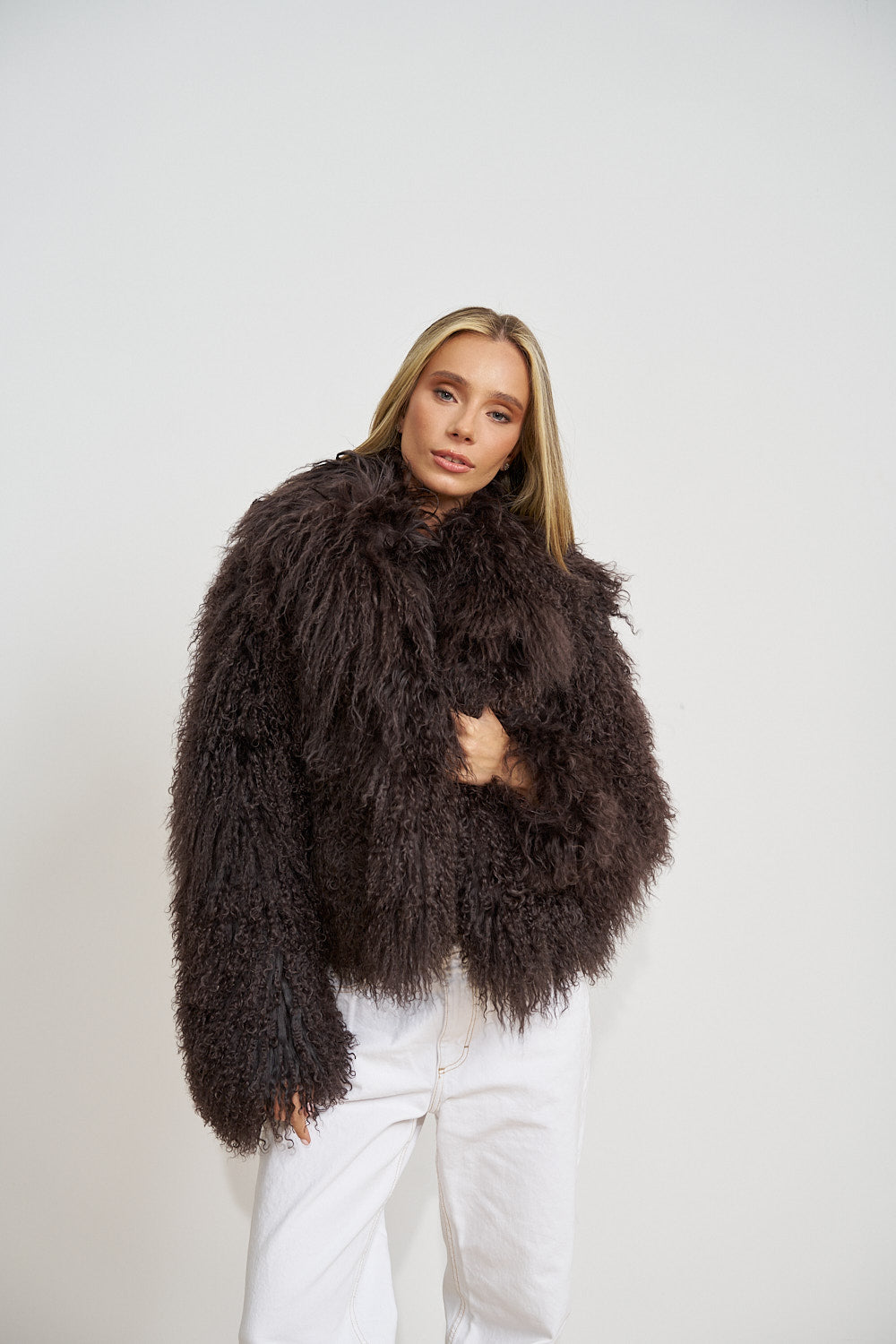
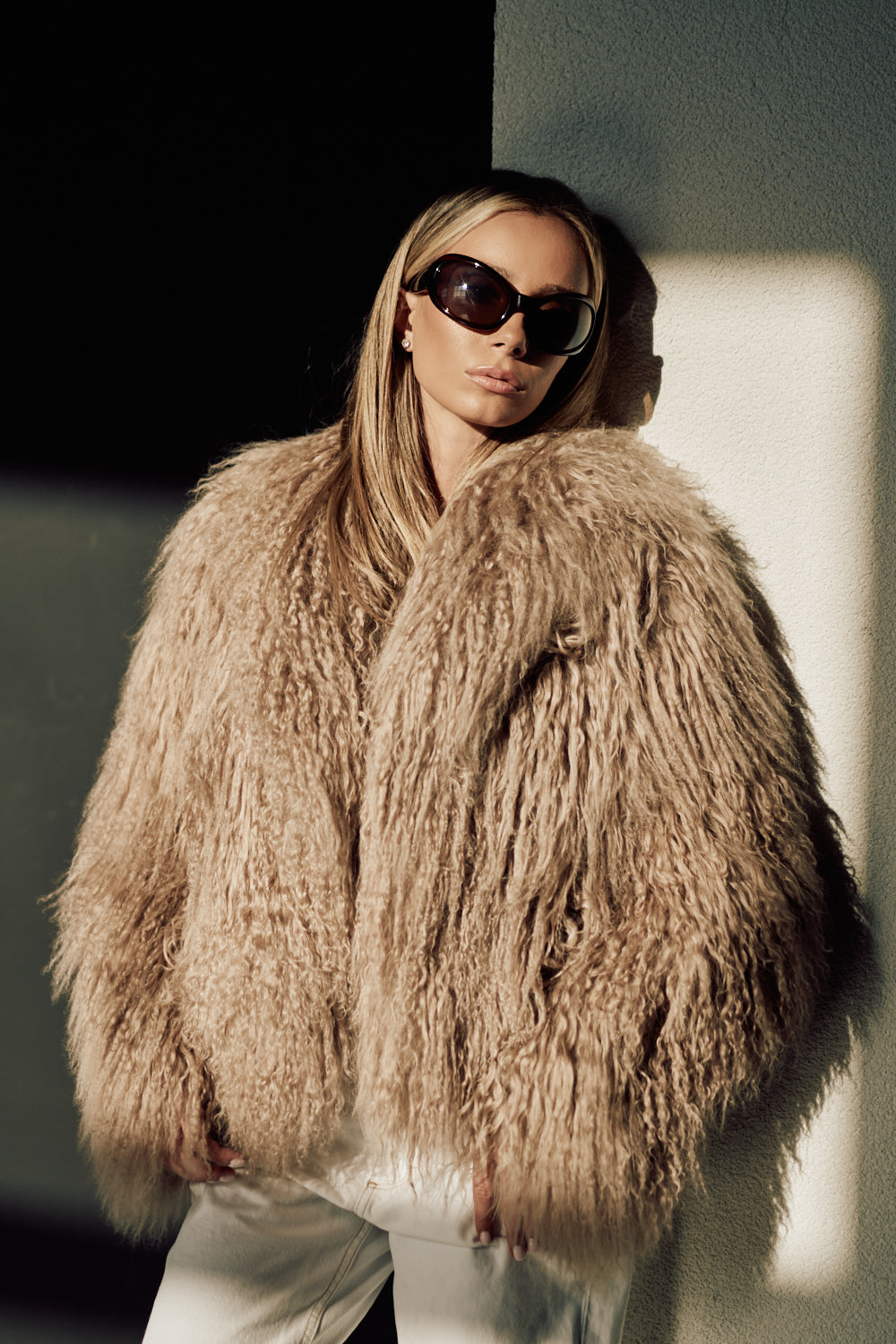
In the winter wardrobe, knits and wool coats serve a different purpose than Mareus shearling pieces: the former use knits or woven fabrics, while shearling retains the wool on the tanned skin. The cleaning methods are not interchangeable.
How to recognize quality merino wool

Check the composition label
A label may indicate:
-
100% merino wool;
-
a blend of merino and cashmere;
-
a blend with synthetic fibers;
-
a simple mention of “wool,” without indicating the breed.
A blend is not automatically inferior. Additional fibers can alter the elasticity, strength, texture, and care requirements. It is important that the proportions are clearly stated.
Analyze the fineness and uniformity
Check the feel, the density, the uniformity of the knit or woven fabric, and the return to shape after a light press. The seams should be even, without strained areas or loose threads.
For a wool coat, also examine the lining, shoulders, hems, and closure system. The fiber is only one of the components of the final quality.
Micronage is important, but it does not tell the whole story
A lower number indicates a finer fiber. It does not automatically prove that the item is stronger, denser, or better cut.
For items worn directly against the skin, fineness may be a priority. For outerwear, structure and strength can be equally important.
A high price does not guarantee quality on its own
The price may reflect the composition, amount of material, cut, labor, and finishing, as well as market positioning. Compare verifiable information, not just the brand's reputation.
How to properly wash merino wool

The product care label takes precedence over any general recommendation.
When it can be machine washed
Machine wash the product only if the label allows it. Woolmark recommends using the wool program or, if one is not available, a delicate or cold-water cycle, along with a neutral detergent.
In practice:
-
turn the item inside out;
-
use the program indicated on the label;
-
choose a wool detergent;
-
use a low spin cycle;
-
do not overload the drum;
-
avoid fabric softener unless the manufacturer recommends it.
How to hand wash a merino item
If the label allows hand washing:
-
Use lukewarm water, approximately 30°C.
-
Add a small amount of wool detergent.
-
Let the item soak for a short time.
-
Handle it without rubbing or twisting.
-
Rinse at a similar temperature.
-
Remove excess water by gently pressing, without wringing.
The question “how do you wash merino wool” does not have a universal answer. A simple sweater and a lined coat may have completely different requirements.
When professional cleaning is necessary
Consult a specialist for structured coats, lined items, pieces with leather or fur inserts, difficult stains, and products labeled “dry clean only.”
Shearling should not be washed at home following sweater instructions. Tanned skin and the wool retained on it require a specialized method.
How to dry wool without deforming it

Knits should be dried flat
Lay the sweater or cardigan on a clean towel and gently return it to its original shape. Drying on a hanger can stretch the knit due to the weight of the water.
Avoid direct heat
Do not place the item on a heater or expose it to direct sunlight. A tumble dryer may only be used if the label explicitly allows it.
Heat and mechanical action can promote shrinkage and felting.
Do not iron directly at a high temperature
If the label allows, use moderate steam or iron through a protective cloth. Avoid high pressure and temperatures intended for cotton.
Stains, pilling, and other common problems

How to treat a fresh stain
Blot the area without rubbing. Do not use hot water, bleach, or harsh solutions before checking the label.
For a persistent stain on a premium coat, consult a dry cleaner familiar with wool.
Why pilling occurs
Pilling is the formation of small balls of fiber as they escape and tangle on the material's surface. It appears most often in areas rubbed by a bag, belt, sleeves, or the sides of the body.
The phenomenon does not automatically prove poor quality. Pills can be gently removed with a wool comb.
What happens when wool gets wet
Shrinkage and felting are promoted by the combination of heat, moisture, and friction. The fibers move and settle into a more compact structure.
Complete recovery is not guaranteed. Prevention by following the label is more reliable than trying to stretch the item afterward.
How to properly store merino wool clothing

Clean and air out pieces before storing them, as stains and organic residue can attract moths. The clothing must be completely dry.
Sweaters and cardigans should be stored folded. Coats can be placed on wide hangers in a textile garment bag that allows air to circulate.
Periodically check your wardrobe and dark areas. If you notice holes, larvae, or suspicious deposits, isolate the item and inspect the rest of your clothes.
How to choose a merino piece for your winter wardrobe

For wearing directly against the skin, prioritize fine fibers, comfortable seams, and a construction that does not irritate. For layering, check the density, elasticity, and the knit's ability to retain its shape.
For outerwear, composition is not enough. Analyze the fabric density, cut, lining, high-stress areas, and care instructions.
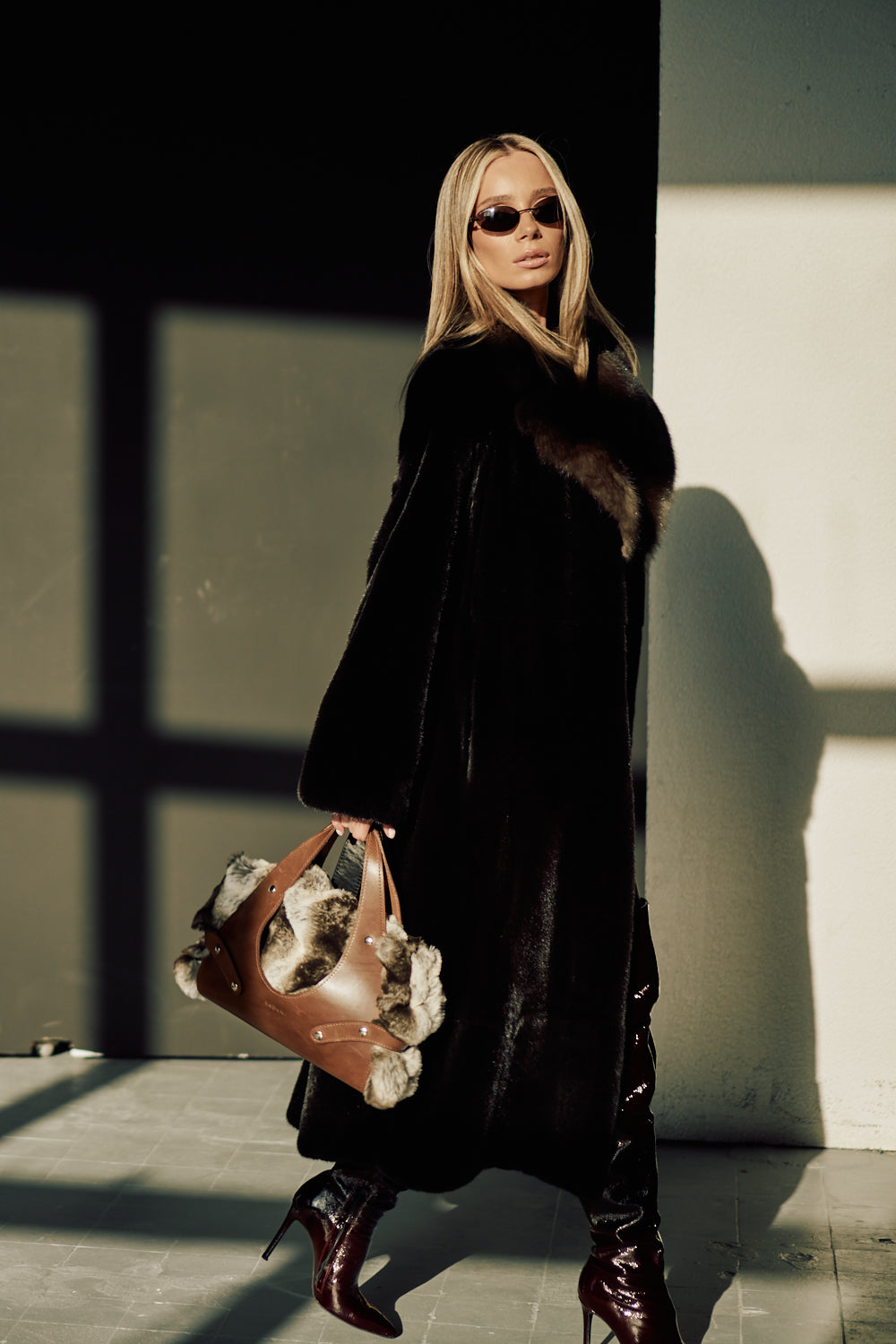
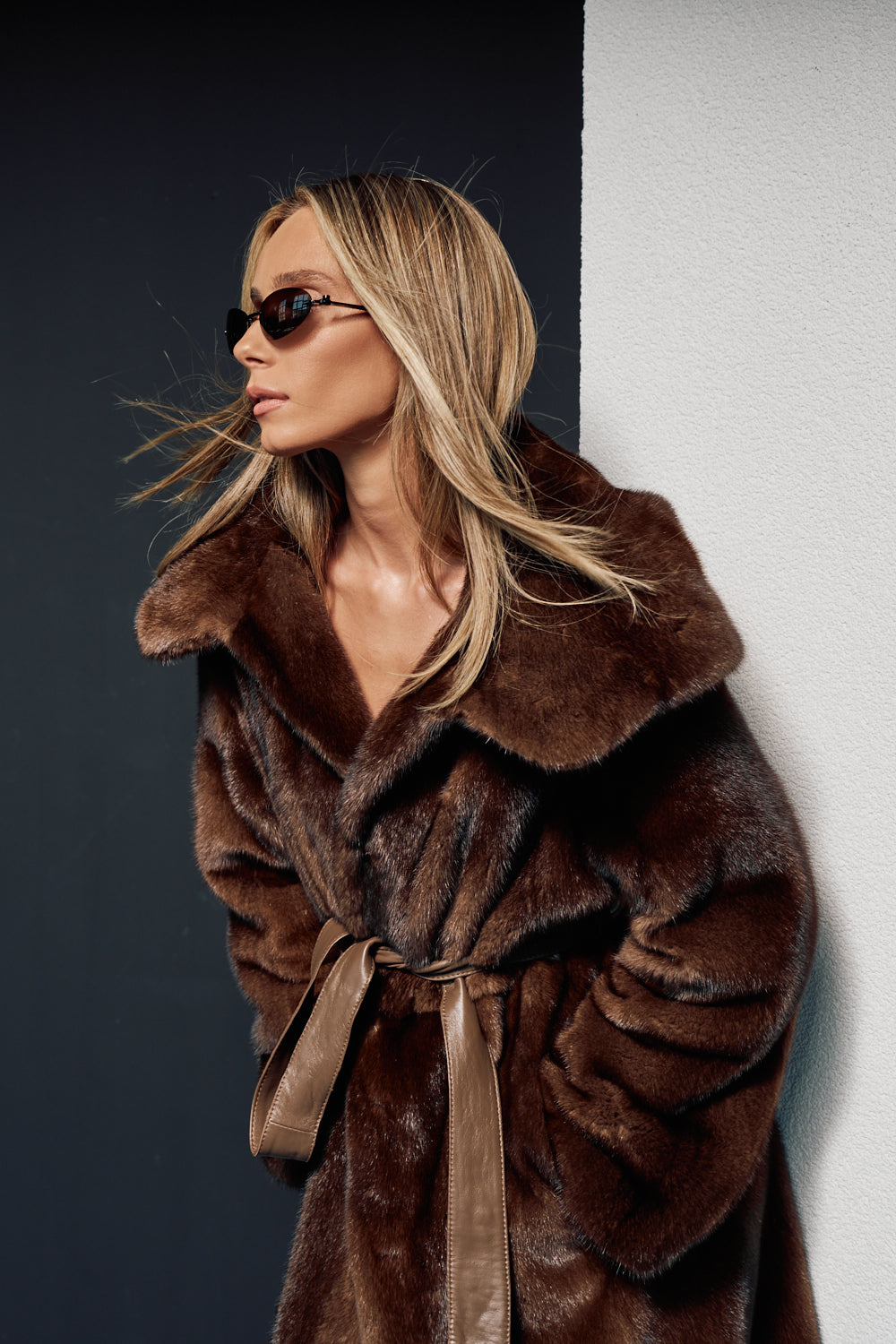
When analyzing a coat from the Mareus cashmere and wool collections, check the exact percentages on the label, the material density, and the construction of each model. Not all items in the category are made of merino.
Conclusion

Merino wool offers fineness, thermal comfort, and versatility, but the fiber name alone does not guarantee product quality. Micronage, composition, density, cut, and finishes must be analyzed together.
The practical rule is simple: air out the item after wearing it, wash it sparingly and only according to the label, dry knits flat, and choose professional cleaning for coats, shearling, and structured items.