




What colors go with gray for clothing? Matching guide
What colors match well with gray depends largely on the shade, undertone, and context, so the result can vary considerably. Gray is considered the second most versatile color in the visual spectrum after black, as it can be successfully paired with over 18 distinct colors, ranging from pastels to saturated tones. However, a light gray and an anthracite gray do not follow the same rules. To provide a practical answer to the question of what matches with gray, we have prepared specific combinations that show which colors pair with gray clothing depending on the garment, occasion, and style. You will discover which colors go with dark gray, which colors go with light gray, and which colors go with anthracite gray for casual, office, and elegant outfits.
Understanding shades of gray and undertones![]()

The color gray has hundreds of shades that differ in tone depth and undertone. On the scale from black to white, humans can distinguish 30 shades of gray, while computers can identify 256. If we also include yellow, green, and blue undertones, we can count them in the hundreds.
Light gray, medium gray, and dark gray
Light gray creates bright combinations and pairs well with white, powder pink, light blue, beige, and pastel tones. It is an airy and subtle shade that requires bright allies such as lilac, red, or pink to achieve a harmonious combination. Medium gray represents the perfect balance between light and dark, being suitable for both daytime outfits and business combinations. Dark gray and anthracite offer a dramatic and deep contrast, and can replace black in elegant outfits.
Cool gray, warm gray, and neutral gray
Most guides omit the crucial detail of the undertone, yet it makes the difference between a dull outfit and a vibrant one. Cool gray has a bluish, violet, or green undertone and pairs ideally with optical white, black, navy, silver, violet, and emerald green. Warm gray, also known as greige, has a yellowish, reddish, or brownish undertone and matches well with cream, beige, brown, gold, burnt orange, red, and olive green. Neutral gray represents a pure mix of white and black, being universal and accepting of any color.
How to identify the undertone of gray clothing
To observe what shades are present in gray, analyze the piece in natural light, next to a white background. Identification methods include:
-
Compare the gray garment with a white piece, a beige one, and a navy one to see if the gray looks more blue, warmer, or neutral
-
Examine the material in sunlight, as artificial light can distort color perception
-
Observe if the texture influences the final look, considering that matte wool, cashmere, leather, and fur with silvery reflections can make the same shade look different
The undertone can be quite pronounced or barely noticeable, so a careful examination will allow you to build harmonious combinations.
What colors match with gray in clothing

Gray with white and black
The combination of gray and white creates a bright, airy look, suitable for daytime and professional settings. Gray with black produces a more pronounced contrast and can be integrated into evening outfits without the rigidity often associated with pure black. To avoid a monotonous result, introduce different textures such as matte wool, silk, leather, or cashmere.
Gray with beige, cream, and camel
Warm tones reduce the severe look of gray and create a sophisticated base for business or smart casual outfits. A gray coat naturally pairs with cream knits, camel trousers, or cognac accessories. The mix of gray and beige has generated its own trend, greige, working well in urban and classic combinations. A very cool gray requires careful balancing with yellowish beiges to maintain visual coherence.
Gray with yellow or ochre
Yellow tempers the industrial look of gray, while gray controls the energy of yellow. Pantone chose "Ultimate Gray" and "Illuminating Yellow" as the colors of the year 2021, validating this dynamic combination. Mustard and ochre shades are easier to integrate into autumn outfits than very intense yellow. Use yellow via a sweater, scarf, or accessories for a controlled accent.
Gray with powder pink
The contrast between the industrial hardness of gray and the delicacy of pink creates a visual balance. Gray tempers the romanticism of powder pink and brings it into a more modern space. Choose light gray for daytime outfits and anthracite gray for a more pronounced contrast. A powder pink sweater worn with gray trousers and black loafers creates an office-appropriate outfit.
Gray with red or burgundy
Gray acts as a background that makes red appear more vibrant, without the visual aggressiveness of the red-black combination. Burgundy offers a more tempered result, suitable for the office and autumn. Pair burgundy with beige, black, or gray to highlight the color without it being too strident. Keep the rest of the outfit in a neutral palette for coherence.
Gray with blue and navy
Both are cool colors that convey confidence, stability, and professionalism. This combination represents the gold standard in the male and female corporate environment, offering a superior alternative to the black suit. Cool gray combines naturally with light blue, cobalt, or navy. A gray blazer combined with a white blouse and navy trousers offers a professional look for the office.
How to style gray based on the main garment

The gray coat
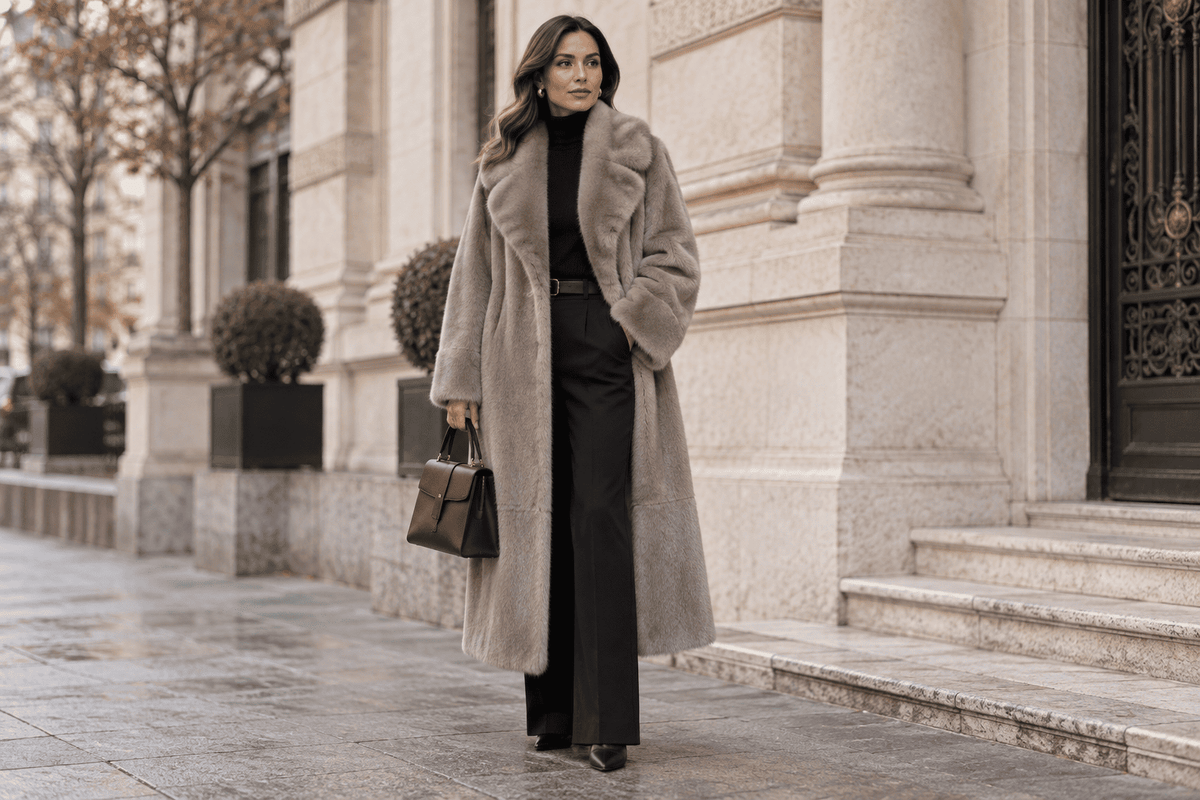
A wool or cashmere coat is the ultimate investment in a functional wardrobe. Pair it with white for a bright and formal look, with black for a subtle contrast, or with navy for professional outfits. A light gray coat becomes more interesting alongside warm tones like camel, cream, and burgundy, while anthracite accepts more dramatic combinations. For layering, wear it over a navy blazer, a white shirt, and gray trousers, or build a monochromatic look by layering several shades of gray.
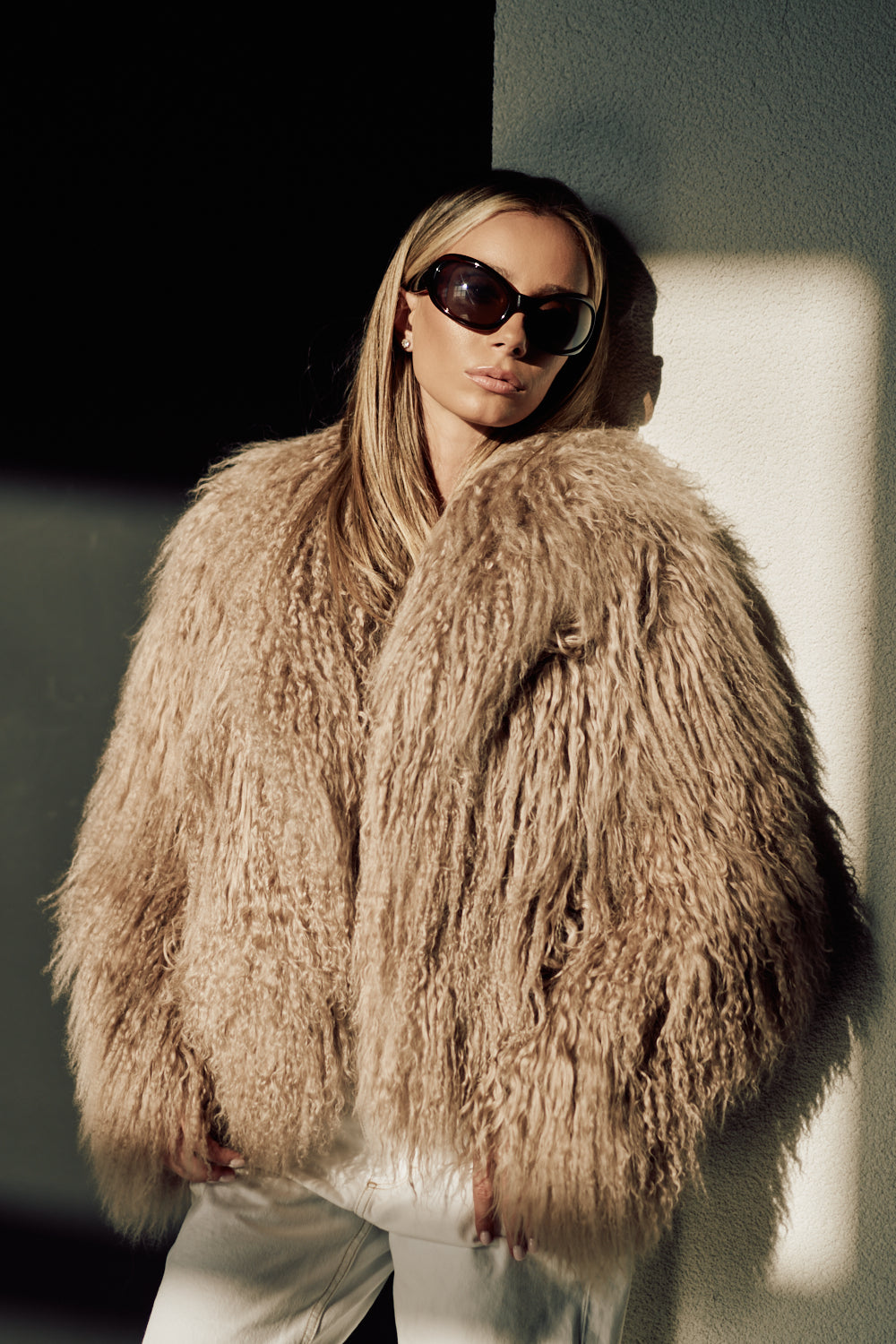
Gray or silver fur coat
The natural reflections of fur already create visual depth, so the rest of the outfit requires simplicity. Combine a silver fur coat with neutral pieces like white, black, cream, or dark denim. For formal events, a sophisticated dress and the coat worn over the shoulders produce a dramatic effect. Avoid multiple prints or massive accessories when the fur texture already takes center stage.
Gray trousers or skirt
Gray trousers pair with white, black, navy, blue, burgundy, and earthy tones. For the office, choose a white t-shirt and white sneakers for simplicity or a white shirt with brown shoes for smart casual. Burgundy adds color without being strident when used in a sweater, jacket, or footwear. Footwear influences the final result, with white sneakers being universal, black shoes offering contrast, and brown shoes warming up the outfit.
The gray sweater
The gray sweater belongs to the basic wardrobe, its color being universal. It combines harmoniously with both calm and bright shades. Wear it with skinny jeans, classic trousers, or skirts of various lengths. The texture of the sweater can transform a simple piece into a centerpiece of the outfit.
Common mistakes when pairing gray

Pairing gray becomes problematic when certain color details are ignored or underestimated.
Ignoring the undertone temperature
Combining warm colors with cool ones without consideration produces a discordant result. A gray with a bluish undertone enters into visual conflict with a very yellow beige, and a warm gray does not integrate naturally with violet or electric blue. Always check color temperatures before pairing or use neutral colors to balance contrasts.
Too much gray without contrast
A gray suit combined with a gray shirt and gray tie looks boring. Vary the shade, material, or cut to create visual depth. If you have a pale complexion, avoid light gray directly next to your face and choose anthracite gray for contrast or add a colorful necklace.
Choosing metal accessories
Silver integrates easily into combinations with cool gray, while gold can warm up neutral and warm grays. Identifying skin undertone through the jewelry test helps with this choice: if gold jewelry favors you, you have a warm undertone, while silver works better for a cool undertone.
Choosing the shade relative to skin tone
A color too close to your skin tone can make you look lifeless. Choose shades that contrast pleasantly or complement your skin tone.
Conclusion

Pairing gray becomes simple when you consider the intensity, undertone, and texture of the material. In reality, gray works harmoniously with both neutrals like white, black, and beige, as well as accent colors like burgundy, blue, or powder pink. Start with the gray pieces you already own and build combinations around them. In this way, you will create elegant and easy-to-reproduce outfits for any occasion.